|
|
| Technology
tips ~ find that file or folder |
Introduction
Have you ever ‘lost’ a file or folder on your computer? I have!
Many times! You create a document, save it, print it and then forget where
you saved it! Well, here are some ideas you can try out to find those elusive
documents.
Documents
folder
One of the first places you should look for
a missing file is in your Documents folder.
The Macintosh computer likes to save files
in your Documents folder by default so that
should be your first port of call when you
go looking for that file.
Recent
Items
If
you have recently used the 'lost' file or
document in the last few days or even week
it may
still be listed in your ‘Recent Items’ menu.
How to locate that?
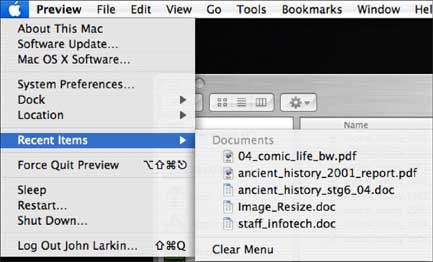
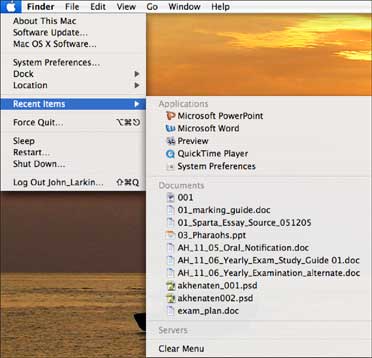
Select Recent Items from the Apple menu on the left hand side of your Apple
computer’s display. See the example below.
|
|
As
you can see in the example above there are
five documents available in the Recent Items
menu. Is the document that you are looking
for listed in that menu? If so select that
item and it should open.If the document or
file is not listed there then you may like
to try the other methods outlined later in
this document.
Fine tuning the Recent Items
You can fine tune the Recent Items menu by
making changes in the System Preferences
application on your Apple computer. How can
you achieve that?
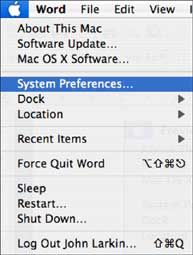
Select the System Preferences menu item from
the Apple menu. See the illustration below.
|
|
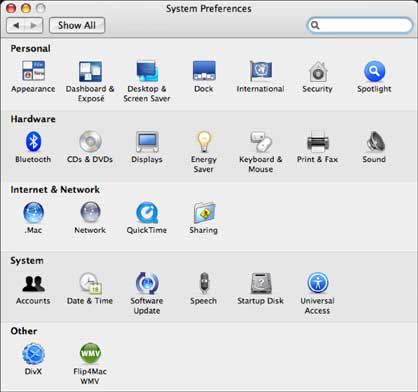
The
application will open and the following window
will appear.
|
|
Click
on the Appearance button situated on the upper
left hand corner of the application window.
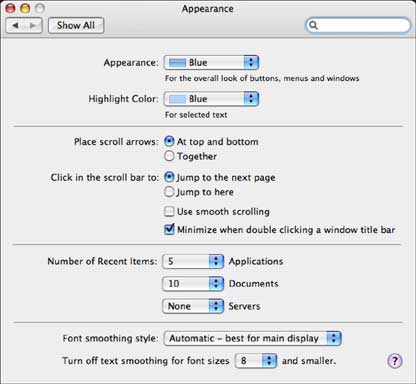
The following window will appear.
|
|
Towards
the bottom of the window you will see the section
listed “Number of Recent Items”.
You can choose how many Applications, Documents
and Servers are appear in the Recent
Items menu.
In the example above I have changed the
desired listings to 5 applications, 10 documents
and no servers. The results can be seen in
the screen shot below. You will see that
five applications are listed in addition to
the ten documents.
|
|
Find
Files
What else can you try to locate a file or folder
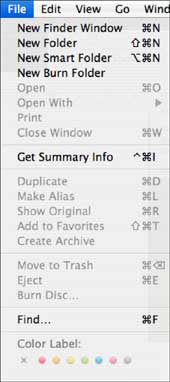
on your computer. You can select the Find… menu
item from the File menu. See the example below.
|
|
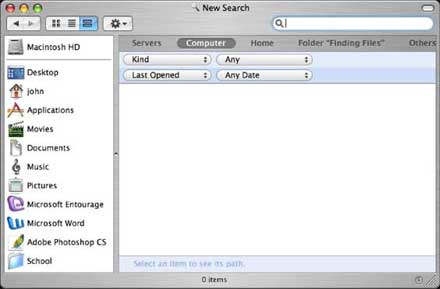
The
following window will appear.
|
|
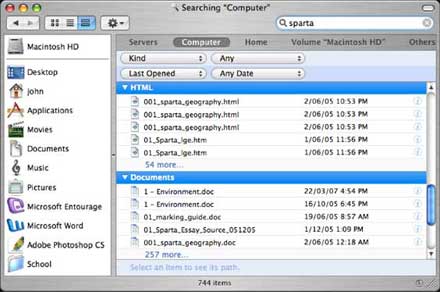
Type
the name of the file or even part of the name
and documents and folders will begin appearing
in the window below. You can even type a word
that appears in the document itself it should
appear in the window below.
|
|
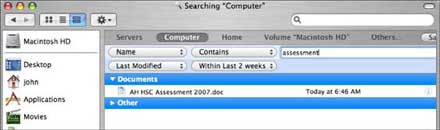
You
will note that there are four buttons located
at the top of the window. You can use these
to fine tune your search even further. Have
a look at the screen shot below to get an idea
or two about the capability of this tool.
A search for a doucment that contains the word
assessment in the file name and was modified
or changed in the last two weeks has been made
using the buttons to fine tune the search. This
can be a powerful tool.
|
|
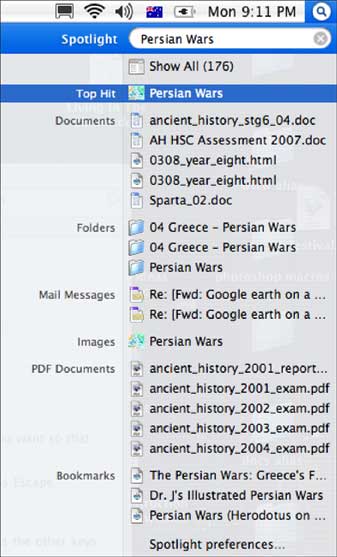
Spotlight
Yet another tool that you can use is Spotlight.
You can access Spotlight by selecting the
small magnifying glass icon located in the
top right hand corner of the Apple computer
screen.
A search field will appear and all you need to
do is type in the name of the file that you are
seeking. You will see from th eexample below
that a variety of files will be listed including
email messages in Entourage and bookmarks in
Safari, for example.
|
|
Typing
Command ~ Space Bar will bring up the Spotlight
menu as well.
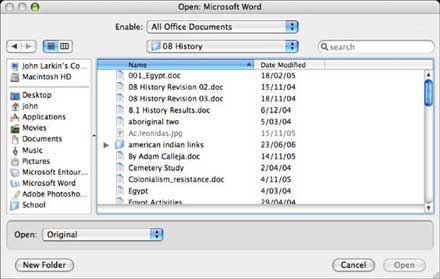
Open Dialogue Box in applications
Another way to find files… you can type
in a search for a document within an open dialogue
box. If you select the “Open…” menu
from the File menu in Microsoft Word you will
see a window like the one below.
|
|
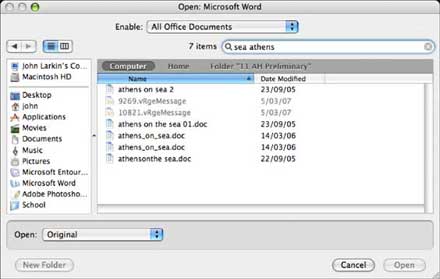
If
you enter the name of the file in the search
field your document will be located quickly.
Look at the example below.
|
|
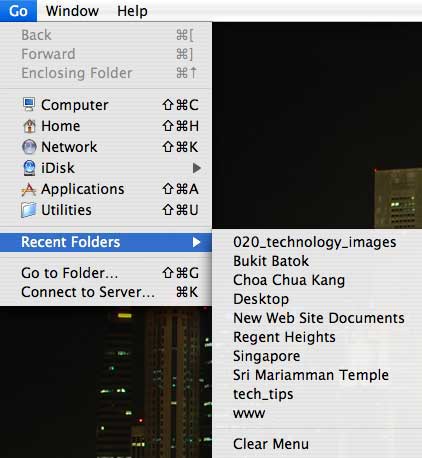
Recent folders
One
more tip that you can use to help find that
file or folder is to select 'Recent
Folders'
from the 'Go' menu. Please
consider the example below.
|
|
Select
your document from the list and proceed with
your work. This technique applies to all applications.
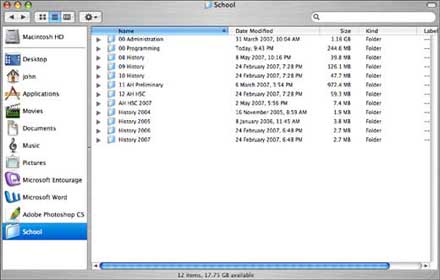
Organisation
When you have the time it is not a bad idea to organise your files. The window
below is an example of what is possible. Naming and numbering conventions can
be applied to your files and folders.
|
|
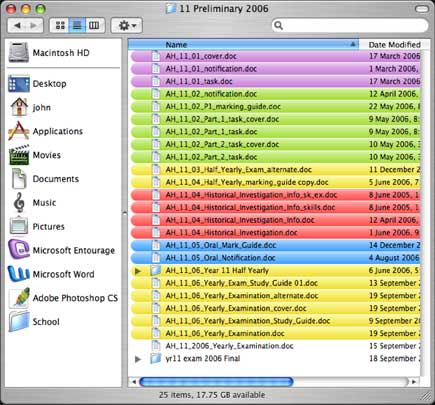
You
can also colour code your documents and folders
using the Color Label feature in the File menu.
|
|